
There is absolutely no way to know what to expect when you walk into an emergency room. There can be a trend of kidney stone patients, children with flu-like symptoms, and if it’s a weekend most likely a stream of EtOH intoxication patients. But this night… this was an interesting night.
It was surprisingly a slow Saturday night at the ER. I know what you’re thinking, did I get the day of the week wrong? A quiet Saturday? That happens? It’s rare and when it happens, absolutely no one is allowed to mention it. Rule number one of working at a hospital: never ever mention how “quiet” or “slow” the floor is because you will regret it. It’s almost like the universe hears us cheering the very rare downtime and blesses us with a board full of all the complicated patients. Trust me, we’ve all done it and then regretted it immediately. It’s nice to have a breather and take a seat after running around patient after patient.
It was around 4AM when we got the notification. A young male enroute s/p trauma. Now, we are not a designated trauma ER and often times the critically traumatic cases are routed to the nearest trauma units. In this case, the closest hospital to the patient was our hospital and the patient needed the immediate medical attention for not just one, but three gunshot wounds.

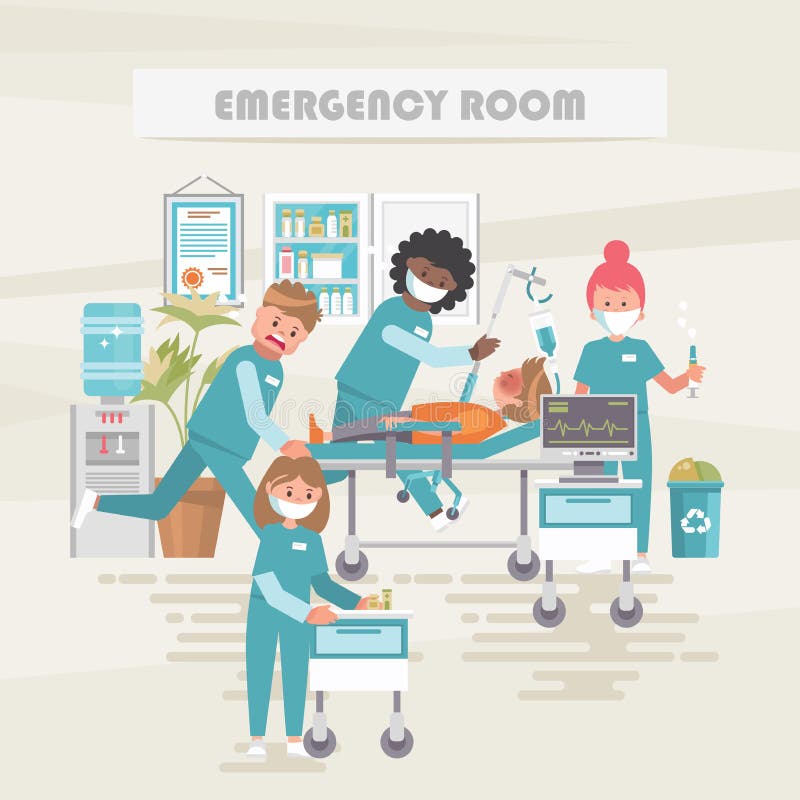
I walked into the chaos of the critical care room and it is swamped with nurses ready with their crash cart necessities, the attending provider, the PAs and med techs. There was also a few other medical staff nearby to tune in; all of our minds curious about what was happening. We so rarely witnessed gunshot wound patients that when one does make his way to triage, everyone was interested.
In came the patient on a stretcher and curled up in distress. Our lovely medical staff were not the only ones witnessing his moans and groans .. he was streaming live on social media while being transported from the stretcher to hospital bed. “Hey MTV, welcome to my deathbed?” I guess you can to do anything for the most engaging content. I would recommend a trigger warning next time.
There was an actively bleeding wound, covered with gauze on the left side of his neck and his left shoulder blade. His pants were ripped and stained with blood all over his back side. every single medical personnel was busy doing their specific task. All the noise is almost harmonious and can feel like there is a ticking clock right inside of your heart. The nurses were quick with no time to waste with their crash cart ready, IV line in place, while the med techs worked in synch to put on the EKG nodes and switching the patient into the very fashionable blue hospital gown.
Then, one of my favorite no b.s. nurses ever so sweetly shouted, “Sir…this is NOT the time or place to be live-streaming. Put that damn phone away”. It was pretty nice to see a phone flying across the critical care room. You don’t really get to see that happening on a day to day basis.
The first ten minutes, “platinum minutes”, after a person is shot is absolutely critical to make sure all the right protocols are followed. The bleeding needs to be identified and stopped as much as possible. Applying pressure to the wound can prevent the patient from excess bleeding which can lead to hemodynamic shock. Gunshot wounds to the body cavities/trunk pose greater risks due to hemorrhaging and organ injury. Although the entrance wound can be addressed, there is no way to decrease the internal injuries without the proper medical attention (usually emergency surgery). The earlier, the better as it can prevent ischemia, organ failure, and death. Extremity gunshot wounds are a little easier to address as the bleeding can be temporarily stabilized with a tourniquet. Worse case scenario would be limb ischemia which is still less riskier than organ injury.

Before a patient is considered for surgery, medical providers will do their best to manage the wound and stop any further injuries from occurring. Surgery can pose a risk as there can be organ dysfunction which can further complicate the surgery and healing process. When a gunshot wound patient arrives at the ER, the medical providers make sure the patient is getting transfusions if there was too much blood loss, pain control, coagulation to increase blood coagulability, airway protection if needed, and monitoring of vitals at all times. To determine the location of a bullet that is lodged into the body, the patient will need a CT scan. This scan will provide valuable information of not only the location of the foreign object, but also the level of internal damage. Bullet wounds in the body cavities are dangerous because it can lead to organ perforation (essentially, a hole in the organ). Even if the bullet did not directly strike the organ, these are post-trauma side effects. Bowel perforation is the most common after a gunshot wound. Many patients return to the ER many months and even many years later with small bowel obstruction due to a prior gunshot wound.
Three bullet wounds may seem like a death sentence. Our live-streaming patient was on the luckier side. Two of the three bullet wounds were just a result of brush fire (the bullets slid past the patient causing abrasions without actually entering the body). The third bullet though, that one was a problem. Unfortunately for the patient, the third bullet was shot at his rear and went into his colon. Gunshot wounds in the colon are more sensitive to possible infections during the healing process. In order to prevent cross contamination from the large intestine while wound healing, surgeons will perform a colostomy. A colostomy is a surgical procedure in which one end of the large intestine is surgically placed outside of the abdominal wall within a stoma (opening in the skin where the colostomy bag is placed). Stool is collected in the colostomy bag which is cleaned out manually in order to provide the gunshot wound the space to heal.

Our live-streaming patient was then transferred to another facility for further medical management. He was alive, stable, and extremely lucky. After that notification, the ER pace slowed down a bit as it gradually does around 4:30AM. We were sitting around, yawning, stretching, and also processing the situation.
One of the medtechs popped in shortly after trying to contain his laughter. “Y’all made it onto the live,” he says laughing and pulling up the patient’s Instagram account.
There we were on the phone screen for the briefest minute, scrubs, gloves, and intensively bright lights, doing what we did best on Saturday Night Live.
References:
Cimino-Fiallos, Nicole. “Gunshot Wounds: A Targeted Approach.” Medscape Drugs & Diseases – Comprehensive Peer-Reviewed Medical Condition, Surgery, and Clinical Procedure Articles with Symptoms, Diagnosis, Staging, Treatment, Drugs and Medications, Prognosis, Follow-up, and Pictures, 28 Jan. 2019, reference.medscape.com/slideshow/gunshot-wounds-6008960.
Drummond, Hamilton. “Gunshot Wounds of the Large Intestine and Rectum, with Special Reference to Surgical Treatment.” Proceedings of the Royal Society of Medicine, vol. 13, no. Surg_Sect, 1920, pp. 24–34., doi:10.1177/003591572001302117. “Home – PMC – NCBI.”
National Center for Biotechnology Information, U.S. National Library of Medicine, http://www.ncbi.nlm.nih.gov/pmc/.
Webster, J. E., and E. S. Gurdjian. “Acute Physiological Effects Of Gunshot And Other Penetrating Wounds Of The Brain.” Journal of Neurophysiology, vol. 6, no. 4, 1943, pp. 255–262., doi:10.1152/jn.1943.6.4.255.
 Med Thoughts